
 By
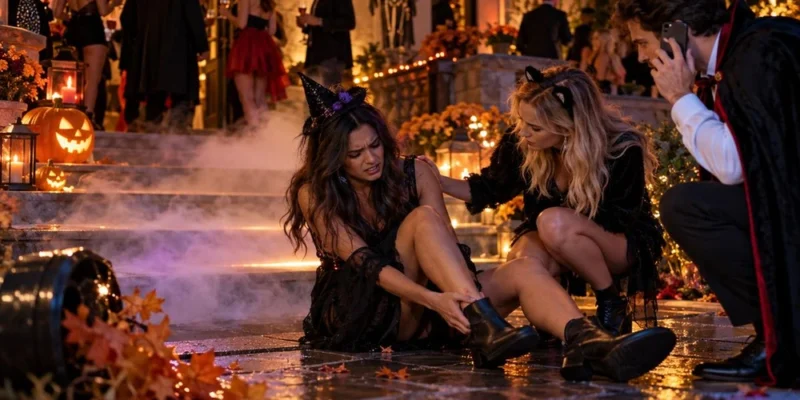
Yes, you can hold a host or business responsible for injuries at a Halloween party or attraction due to an unsafe condition they should have fixed or warned you about. California requires property owners to use reasonable care. Hosts generally are not liable for serving alcohol to adults, but there are exceptions for minors. Signed waivers do not excuse gross negligence. Document the scene quickly, get medical care, and file within two years.
You came for the costumes and the candy bowl. You left with a broken ankle from a fog-covered staircase, a burn from a jack-o’-lantern candle, or a bite from the host’s dog. Now you are in pain, and you feel awkward even thinking about blaming someone you know. If you are wondering whether you need a premises liability lawyer in Orange County, you are not being ungrateful. You are being practical.
“Premises liability” is the legal term for injuries caused by unsafe conditions on someone’s property. It covers everything from a neighbor’s living room to a professional haunted attraction. And in most cases, the host’s insurance pays for it. This money comes from the host’s homeowner’s, renter’s, or business insurance, which is designed for exactly this kind of situation.
This guide explains when a host or business is responsible, how alcohol and waivers change the picture, and what to do now to protect yourself.
Can You Sue if You Were Hurt at a Halloween Party?
Often, yes. California law requires property owners and hosts to use reasonable care to keep their property safe for guests. If you were hurt by a hazard the host knew about or should have discovered but failed to fix or warn you about, you may have a premises liability claim.
The rule comes from California Civil Code section 1714, which says everyone is responsible for injuries caused by their lack of ordinary care in managing their property. In the landmark case Rowland v. Christian (1968), the California Supreme Court made clear that hosts owe social guests this same duty of reasonable care.
That does not mean a host is responsible for every injury. Accidents happen, and some risks are simply part of life. The key question is whether the host acted reasonably under the circumstances. On Halloween, when hosts dim the lights, fill the room with fog, and string cords across the floor, the circumstances matter.
California also uses “comparative fault.” If you were partly careless, such as by ignoring a clear warning, your compensation may be reduced by your share of blame, but it is not wiped out.
Common Halloween Party Injuries and Who Is Responsible
The most common Halloween party injuries are trips and falls in dim or cluttered spaces, burns from candles and decorations, and dog bites. Responsibility depends on whether the host created the hazard, knew about it, or should have found it with a reasonable look around.
Trips and falls
Halloween décor turns ordinary homes into obstacle courses. Fog machines leave floors slick. Strobe lights and blackout curtains hide steps. Extension cords for animatronics snake across walkways. Props crowd hallways and staircases.
A host who creates these conditions has a duty to manage them by adding lighting on stairs, taping down cords, or blocking off dangerous areas. When someone falls because a host ignored an obvious risk they created, that is often a strong claim.
Burns and fires
Candles inside jack-o’-lanterns, flaming props, and fire pits are classic Halloween hazards, especially around flowing costumes. A host who leaves open flames in crowded walkways or near decorations may be responsible if a guest burns themselves.
Dog bites
Halloween is stressful for pets. Constant doorbells, strangers in masks, and loud noises can make even a gentle dog react. In California, dog owners are generally strictly liable for bites under Civil Code section 3342. That means the owner can be responsible even if the dog had never bitten anyone before.
Alcohol at the Party: When a Host Is Liable
California generally does not hold hosts responsible for serving alcohol to adult guests, even if a guest later causes harm. The major exception involves minors: an adult who knowingly gives alcohol to someone under 21 at their home can be liable for resulting injuries.
Under Civil Code section 1714, California treats drinking alcohol, not serving it, as the cause of an intoxicated adult’s actions. That is why most claims against hosts for an adult guest’s drunk driving or fights do not succeed.
The law treats minors differently. As Nolo explains, an adult who knowingly furnishes alcohol to a person under 21 at their residence can be held responsible for injuries that follow. Halloween parties often mix teens and adults, so this exception matters.
Keep in mind that alcohol is separate from property conditions. A host who served adults drinks can still be responsible for a dangerous staircase or an unattended candle that caused your injury.
A party is not a waiver. Hosts still owe their guests reasonable care.
Hurt at a Haunted House or Halloween Attraction
Businesses that run haunted houses and Halloween attractions must keep their attractions reasonably safe for paying guests. Many ask you to sign a waiver, but in California, a waiver generally cannot excuse gross negligence. If an attraction’s extreme carelessness injured you, you may still have a claim.
Orange County takes Halloween seriously. Buena Park is home to one of the best-known seasonal attractions in Southern California, and haunted houses and mazes pop up across the county every October. These businesses deliberately create darkness, confusion, and surprise. That is the fun. But they still must design and run their attractions with reasonable care.
What does that look like? Safe walkways, secured props, clearly marked exits, trained staff, and limits on how actors may interact with guests. When a guest is hurt because of a broken railing, a collapsing prop, or an actor who shoves someone into a wall, the business may be responsible.
What a waiver really covers
Many attractions require guests to sign a release before entering. Waivers can limit claims for ordinary risks, like being startled or bumping into a soft wall. But the California Supreme Court held in City of Santa Barbara v. Superior Court (2007) that an agreement releasing liability for future gross negligence is generally unenforceable. Gross negligence means an extreme departure from ordinary care, not just a small mistake.
So do not assume a signed waiver ends your case. Whether it applies depends on what happened and how the waiver was written.
How Premises Liability Claims Work in Orange County
To win a premises liability claim, you generally need to show the property owner or business knew about the hazard or should have discovered it and failed to fix it or warn you. Evidence like photos, videos, and witness statements is critical, and homeowner’s or business insurance usually pays the claim.
In California, “notice” is often the central issue. Under California’s official civil jury instructions on premises liability, published by the Judicial Council, a property owner may have actual notice, meaning they knew about the hazard, or constructive notice, meaning it existed long enough that a reasonable check would have caught it. When the host created the hazard themselves, like setting up a fog machine on the stairs, notice is usually straightforward to show.
Here is how these claims typically work:
-
Insurance pays most claims. Homeowner’s and renter’s policies usually include liability coverage for guest injuries. Businesses carry commercial liability insurance
-
Evidence fades quickly. Decorations come down on November 1. Photos and videos from the night are often the best proof of the conditions
-
Comparative fault applies. If you were partly at fault, your recovery may be reduced, but not eliminated
-
Medical records matter. They connect your injury to the incident and show its extent
If a fall caused a head injury, take it seriously even if you felt fine at first. Our brain injury attorneys help people understand concussions and traumatic brain injuries that show up days later.
The decorations come down November 1. Your evidence should not go with them.
What to Do After a Halloween Injury
Get medical care, take photos of the hazard and your injuries, and get names of witnesses before the party ends. Report the injury to the host or business in writing, and avoid giving a recorded statement to any insurance company until you understand your rights.
The most important steps are:
-
Get medical attention right away, even for injuries that seem minor
-
Photograph the hazard that caused your injury from several angles before it is moved
-
Ask guests for photos and videos from the party, which often capture the conditions
-
Get witness names and phone numbers
-
Report the incident to the attraction’s staff or management and request a copy of any incident report
-
Keep your ticket, receipt, or waiver if you were at a business
-
Avoid posting about the incident on social media
Watch the deadlines. In most cases, California gives you two years to file a personal injury lawsuit under Code of Civil Procedure section 335.1. If you were hurt on city or county property, like a public park event, you may need to file a claim within six months under Government Code section 911.2.
The Bottom Line
Halloween fun does not cancel a host’s or business’s duty to keep guests safe. If an unsafe condition hurt you, you may have a claim, and in most cases it is insurance, not your friend or neighbor, that pays. Act quickly, because Halloween evidence disappears fast.
Whether you were hurt at an attraction in Buena Park, a house party in Fullerton, or a neighborhood event in Tustin, our personal injury team can help you understand your options.
Been in an accident or hurt on the job? You don’t have to navigate insurance companies alone. Oracle Law Firm fights to get you the compensation, control, and clarity you deserve.
Get a Free Consultation or call 888.597.4099.
Disclaimer: This article is for general information only and is not legal advice. Reading it does not create an attorney-client relationship. Every case depends on its own facts, and past results do not guarantee future outcomes. For advice about your situation, speak with a licensed California attorney.
Frequently Asked Questions
Can I sue someone if I got hurt at their Halloween party?
You may be able to. California requires hosts to use reasonable care to keep their property safe for guests. If a hazard the host created, knew about, or should have discovered caused your injury, you may have a claim, which is usually paid by the host’s homeowner’s or renter’s insurance.
Is a party host liable if a drunk guest hurts someone?
Usually not, if the guest was an adult. California law generally treats drinking, not serving, as the cause of an intoxicated adult’s actions. The main exception is for adults who knowingly give alcohol to someone under 21 at their home, who can be held responsible for resulting injuries.
Does a waiver protect a haunted house from lawsuits?
Not completely. A waiver may limit claims for ordinary risks, but the California Supreme Court has held that agreements releasing liability for future gross negligence are generally unenforceable. Whether a waiver applies depends on what happened and how it was written.
Who pays if the host’s dog bites me at a party?
California generally holds dog owners strictly liable for bites under Civil Code section 3342, even if the dog never bit anyone before. Often, the owner’s homeowner’s or renter’s insurance covers the claim, though some policies exclude certain breeds or dogs with a bite history.
How long do I have to file a claim after being hurt at a party?
Most California personal injury lawsuits must be filed within two years of the injury. If you were hurt on government property, such as at a city-run event, you may need to file a claim within six months. Acting early also helps preserve photos and other evidence.
Comments